About the Florida Keys Overseas Heritage Trail
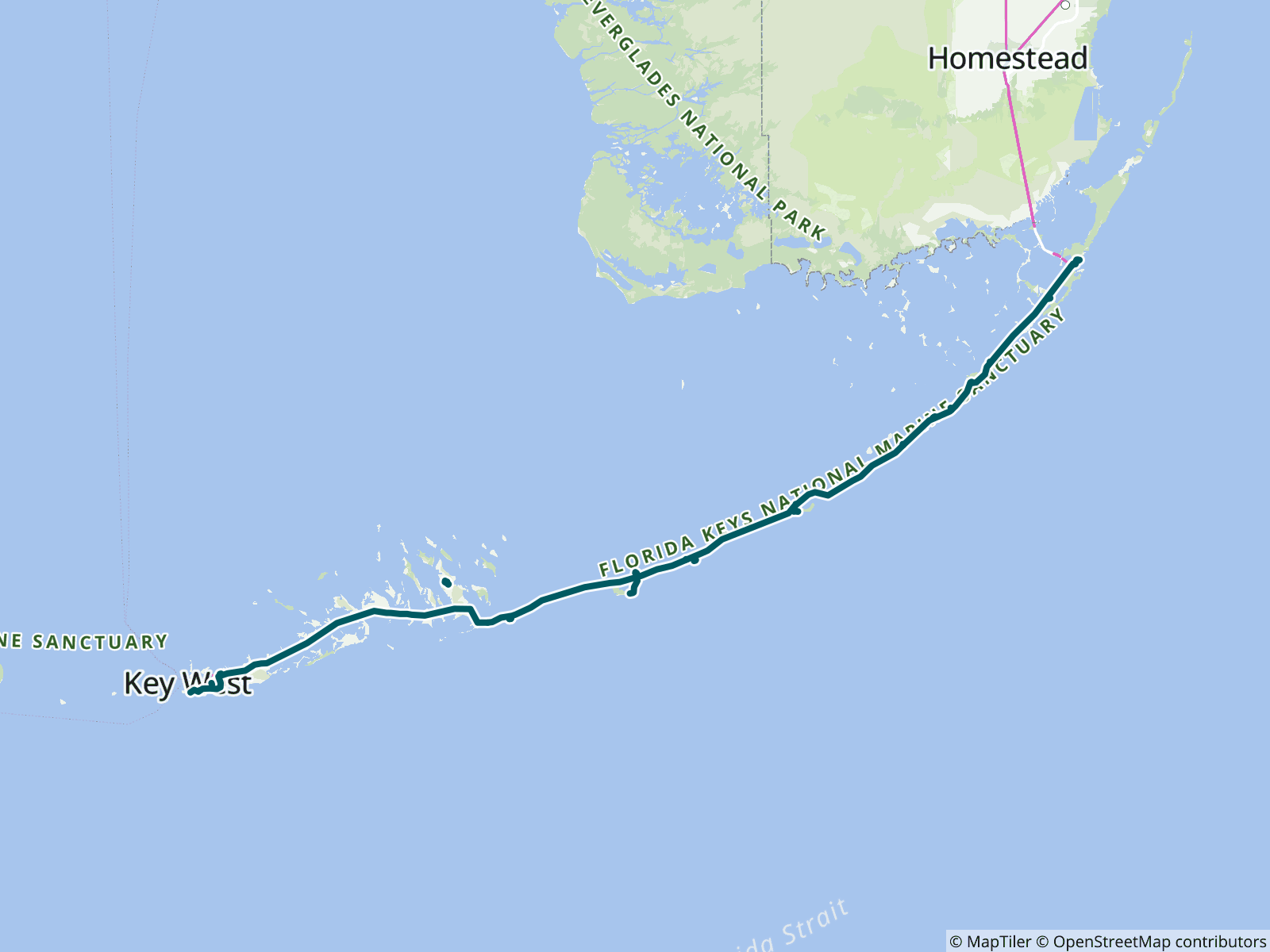
The Florida Keys Overseas Heritage Trail is a 108-mile trail across the Florida Keys.
*****************
Sparkling waters. Tropical forests. Salt breezes. Vintage waterfront motels. And a relaxed vibe that lures you in for a cup of Cuban coffee or a margarita at a tiki bar. That's what sets the Florida Keys Overseas Heritage Trail apart from other trails in the United States: 108 miles of island hopping, a taste of the Caribbean in Florida.
A linear Florida State Park with abundant services, the Florida Keys Overseas Heritage Trail mixes paved bike paths, dedicated bridges, and bike lanes to connect the Southernmost Point of the United States in Key West with Key Largo.
Following the route of the Overseas Railroad (1912-1935) and the original Overseas Highway (1928) while using some of the original historic bridges, it is a trail like no other in America.
Serving as the southernmost leg of the East Coast Greenway for cyclists, it offers sweeping panoramas of mangrove-fringed islands in turquoise waters. As the southernmost piece of the Eastern Continental Trail, its ocean views are unlike those found on any hiking trail worldwide.
ABOUT
The Florida Keys Overseas Heritage Trail uses a combination of bike paths, boardwalks, dedicated bridges, side path along US 1, and bike lanes on US 1 to connect the Florida Keys together. Some parts of the trail are better suited than others for day trippers looking for a paved bike path in the Florida Keys, with long unbroken stretches along the major islands. The historic bridges of the former Overseas Railroad provide a great deal of the allure to the trail in the Lower and Middle Keys. Benches are provided in many places, especially at the ends of the long bridge crossings at the southern end of the trail. The trail passes by and sometimes right through the major parks and natural attractions of the Florida Keys.
We've included information about those parks and routes for the trails they contain within this app.
CAUTIONS
The usual traffic, distracted drivers, and trash tossed by motorists is familiar to anyone using bike lanes or side paths. But this trail has some oddball hazards to watch out for, starting with poisonous trees.
Don't eat any fruit you see.
Stay out of trailside tropical forests unless a designated hiking trail invites you in. See our detailed cautions about tropical plants at https://floridahikes.com/floridas-toxic-trees Iguanas sun themselves on the trail, and for cyclists, some are large enough to put a real hurting on you should they dart out in front of you.
It's not unusual to find vehicles parking on the trail (even official vehicles) but especially near the bridges where the anglers gather, and especially on weekends.
On the bridges themselves, caution must be taken where people are fishing so they do not cast over you as you are passing by.
Cyclists, if you are looking to ride the length of the Florida Keys, you must be comfortable riding with and in traffic to complete it all. This includes crossing the Seven Mile Bridge in a wide bike lane with high-speed traffic next to you and no shelter from sun, wind, or storms for over seven miles. With having the Atlantic Ocean on one side and Florida Bay on the other the length of the trail, prevailing winds should be taken into consideration.
Because of the trail's proximity to road debris off US 1, spare tubes, tires, and a repair kit are a must. There are bike repair and rental shops on most of the major islands. They are noted under those categories. Some will assist with roadside repair.
Hikers and cyclists should plan to camp in established campgrounds or find lodging. As tent camping options are very limited, reserve early.
We've found the quiet season for campgrounds and hotels to be the first two weeks of December.
Keep fresh water in mind. There are no surface sources, so convenience stores and park restrooms are must-stops to tank up.
Sun and rain exposure should be planned for, with the trail being in the open for the majority of its distance.
CREDITS
Photographs by Sandra Friend and John Keatley, with a few images from ECT hikers Mary "Denali" McKinley and Bob "LWOP" Coveney. Adobe Stock image of Key West Post Office.