
12 Lessons I Learned Too Late on Trail, So You Don’t Have To
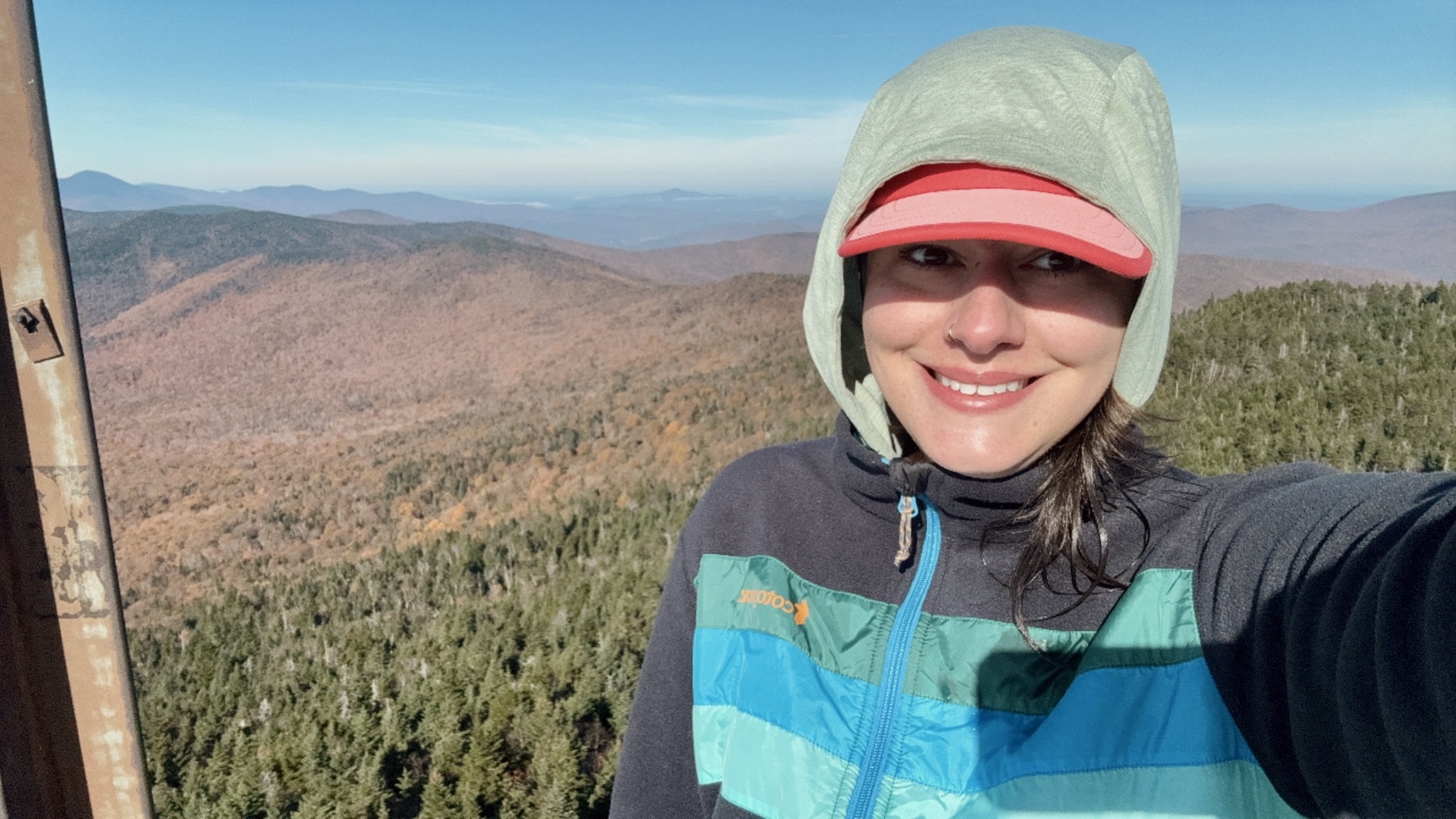
Photo provided by Angela Ferrante
I did not grow up in a backpacking family. Some of my early hiking gear included worn-out gym shoes, cotton T-shirts and a Jansport backpack.
Before I started the Appalachian Trail, I had been on maybe five backpacking trips. Since then, I’ve thru-hiked the Appalachian Trail and Long Trail and backpacked routes including the Timberline Trail, Trans-Catalina Trail, West Highland Way, Fundy Footpath, Loowit Trail, the Dingle Way, sections of the Continental Divide Trail through Glacier National Park and more.
After more than 3,500 miles, these are the lessons I wish I had figured out sooner…
1. Your height does not determine your backpack size
I am six feet tall, so I bought a men’s XL backpack. Dumbass move.
Pack sizing has much more to do with torso length than overall height, and my torso is around 17.5 inches. I am basically all legs. I made it roughly 700 miles into the AT before realizing that maybe backpacking was not supposed to hurt quite that much.
Get fitted, put actual weight in the pack and walk around. I spent hundreds of miles assuming I needed to toughen up when I really just needed a smaller backpack.
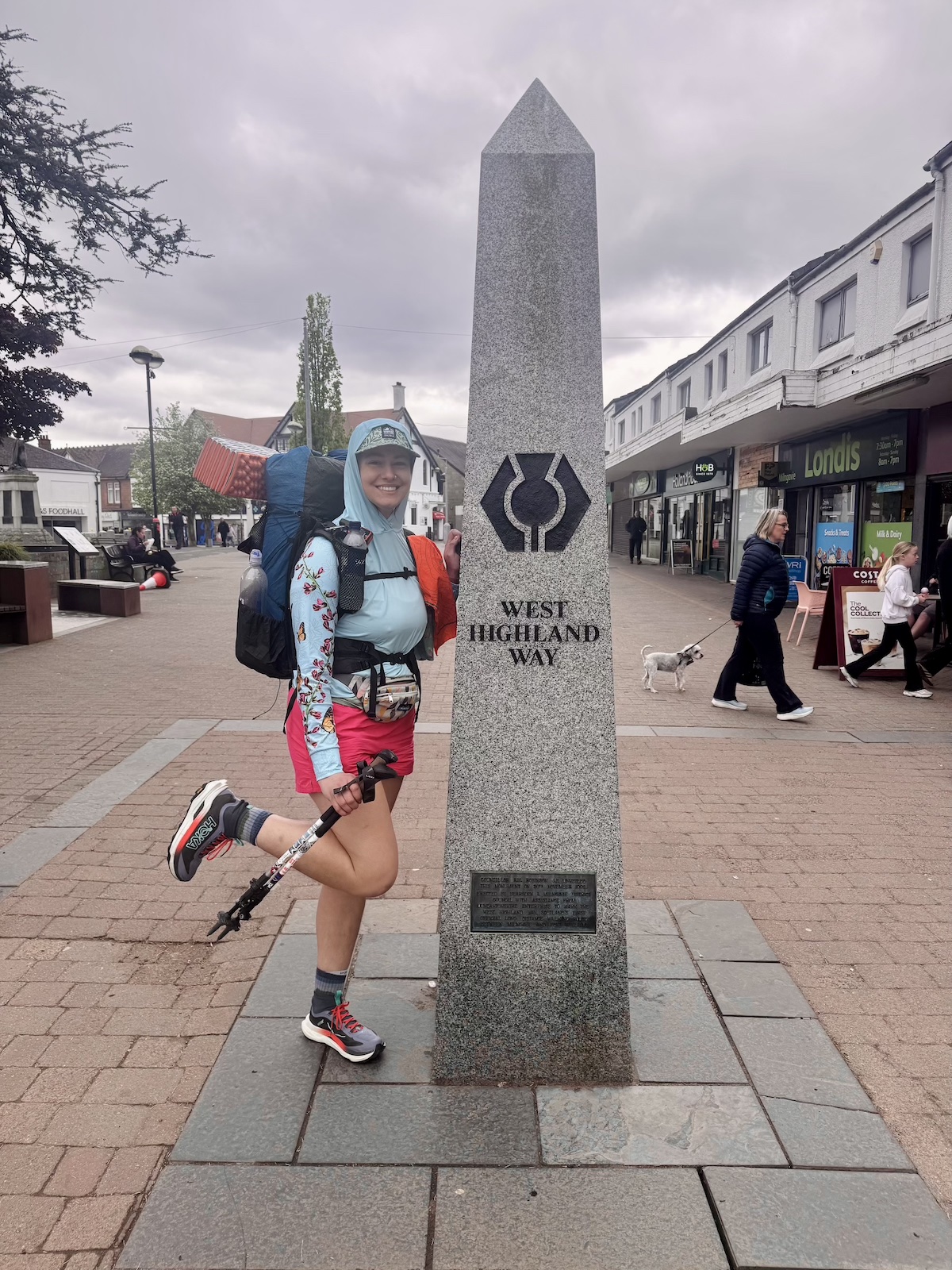
Photo provided by Angela Ferrante
2. Being out of breath does not mean you’re bad at hiking
I used to think I would eventually get “fit” enough that steep climbs simply stopped being that hard.
More than 3,500 miles later, I still huff and puff uphill.
Initially, I was insecure about this. After thousands of miles, I now know what pace I can sustain and when I actually need a break versus when I’m simply uncomfortable. I also know that pace changes. What I can comfortably do at 55 degrees on a crisp day may be very different at 85 and humid, especially with direct sun, a heavy water carry or bad sleep.
I used to treat pace like a grade. Now, if it’s hot as hell and I’m climbing at one mile an hour, I’m climbing at one mile an hour. I’ll get there.
3. Mileage alone tells you almost nothing about how hard a day will be
Early on, I thought 20 miles was harder than 15, which was harder than 10. That’s not universally true.
I finished my CDT section through Glacier National Park with a 24-mile day in less than 10 hours. The next weekend, 14 miles in the Adirondacks kicked my ass and took me the same amount of time.
I did not lose all my fitness in seven days. They were just completely different miles.
Rocks, roots, mud, elevation, weather and pack weight can change everything. Twenty miles somewhere might feel great. Somewhere else, 10 can cook you.
What those miles actually look like is way, way more important than the mileage itself.
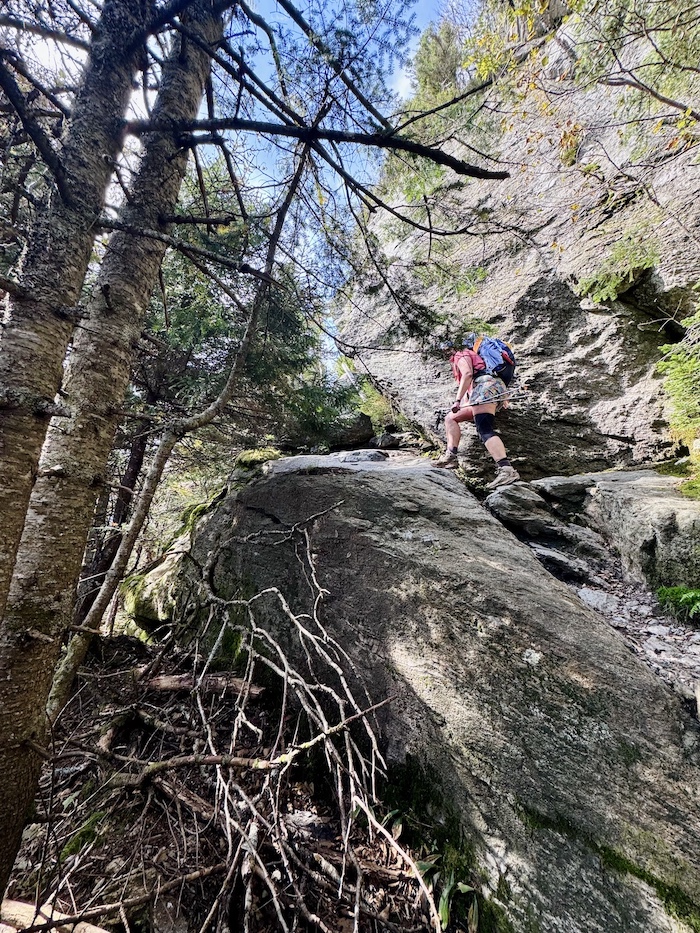
Photo provided by Angela Ferrante
4. A miserable climb is still finite
Say I have a two-mile climb with 1,700 feet of gain. I know I’m probably moving one mile an hour. It might suck. I’ll be breathing hard, sweating and checking FarOut every 10 minutes hoping I have somehow teleported uphill.
But it’s literally just two hours.
In two hours, that specific climb is over, and barring some seriously bad navigation, I never have to climb it again.
That sounds obvious, right? But that mindset shift changed things for me. This sucks for another hour is much easier to deal with than this sucks with no endpoint attached.
Let’s be for real. Sometimes, hiking does suck. It just usually doesn’t suck forever.
5. You really, really don’t need a tramily
Before the AT, I assumed finding a trail family was basically part of thru-hiking. You meet your people, become inseparable and all walk up Katahdin together months later.
That totally happens for many people. For others, it doesn’t.
People hike at different speeds, take zeros on different days, get injured, go home or decide they suddenly want to do 25-mile days. Sometimes you love someone… and also enjoy them much more when you aren’t spending every waking hour together.
I spent parts of the AT with people I loved and long stretches alone or moving between groups. For a while, I thought I had somehow failed to find the “right” tramily.
I hadn’t. Some of my strongest trail friendships came from people I didn’t hike with continuously.
6. Tramilies work differently than normal backpacking groups
On a regular backpacking trip, the slowest person usually sets the pace. If one person can comfortably do eight miles and everyone else can do 12, you’re probably doing eight.
Thru-hiking can work almost in reverse. If someone in your tramily wants to do 22 miles and you want to do 15, they can slow down. If they don’t, they just keep walking. You either push harder to keep up or let them go.
I thought a tramily was basically a backpacking group that lasted six months. But it’s usually much more fluid: people whose mileage, town schedules, budgets and personalities happen to line up for a while.
If staying together means constantly hiking farther than you feel comfortable doing, taking (or not taking) zeros or speedrunning things you wanted to see, the group has started making your decisions for you. And that’s not really “hiking your own hike,” is it?
7. Being alone on trail is not a problem you need to fix
Part of why I cared so much about finding a tramily was that I assumed being alone meant something had gone wrong.
But being alone can be rewarding in its own way. There’s a LOT of freedom in having nobody else’s schedule involved. If I want lunch at 10:45, I eat lunch. If I feel good and want another six miles, I keep walking. If I want to sit somewhere beautiful for half an hour, nobody is waiting. If I want to stop short of my goal that day, I stop short.
I still love hiking with other people. I just don’t need someone there for the trip to count.
Once I stopped treating solitude like a failure state, I stopped feeling like I had to cling to people simply because they happened to be nearby.
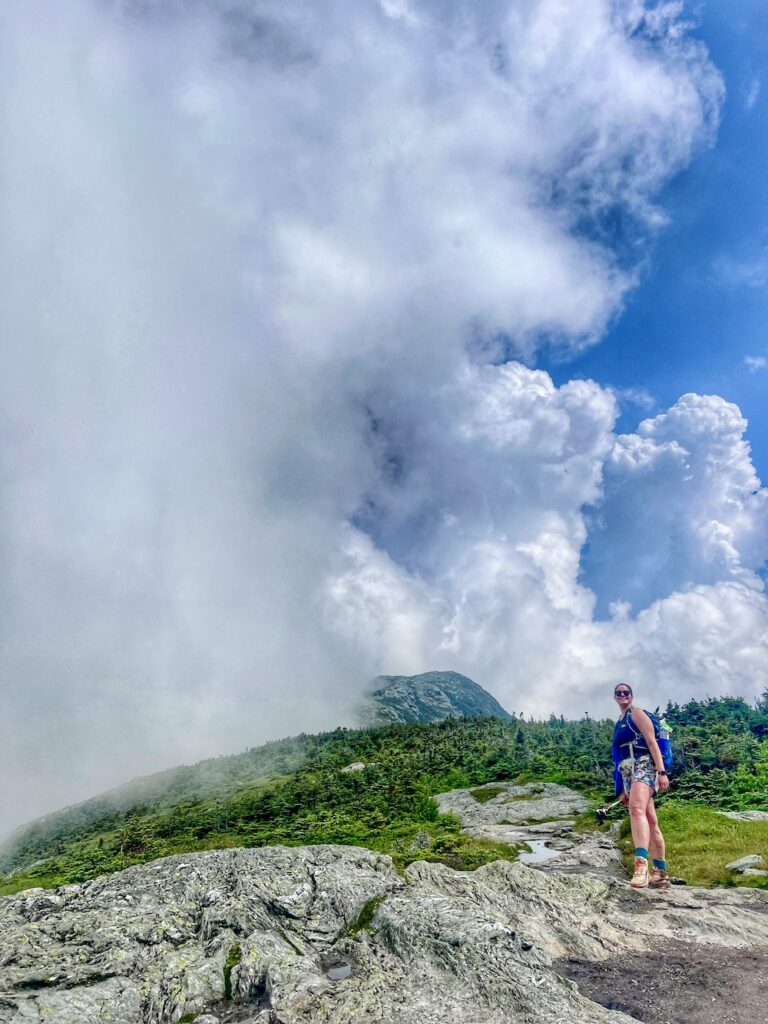
Photo provided by Angela Ferrante
8. Starting overweight does not mean you need less food
I started the AT overweight, and while a lot of new thru-hikers famously carry too much food, I made the opposite mistake.
I didn’t bring enough.
Somewhere in my head was the idea that because I had excess body fat, I could afford to carry less. But I was walking all day and still starving. Body fat does not replace the food you need to hike for eight, ten or twelve hours, recover and do it again, day after day, week after week. Having excess body fat did not make a 15-mile day free.
I lost weight on trail anyway. I totally did not need to under-fuel myself to make that happen.
A thru-hike is really not the time to turn “I should probably eat less” into your resupply strategy.
9. Calories matter, but you cannot live on Nerds Gummy Clusters
Candy is great trail food, but calorically dense and nutritionally dense are not the same thing. If I strung together days of mostly sugar and snacks without much protein, fat or anything resembling an actual meal, I felt it.
I was 30 on the AT, not 19, and my body had less patience for nonsense. If I ate poorly for several days, I felt it when I had another mountain to climb the next morning.
You can probably hike 18 miles today on Pop-Tarts and Nerds Gummy Clusters. The question is whether you can do it again tomorrow, and the next day and the day after that.
Bring the candy, but PLEASE bring some real food, too.
Photo provided by Angela Ferrante
10. Being tough and ignoring a problem are not the same thing
During the southbound section of my AT flip-flop, near Fontana Dam, I found a tick on myself and then developed a bull’s-eye rash.
I was roughly 200 miles from Springer. I could have come up with a hundred excuses to ignore it: I was almost done, stopping would mess with my schedule, I wouldn’t finish with my friends, maybe the rash was nothing.
None of those excuses made it less concerning. So I got myself to Franklin, went to urgent care, got antibiotics and took a week off before hitting the trail again.
Long-distance hiking makes you very, very good at continuing while uncomfortable. The more important skill is knowing the difference between this sucks, but I’m fine and no, this actually needs attention.
11. Do not quit on a bad day
This is one you’ll hear a lot, and for good reason. There will be days when you hate thru-hiking. You’ll be wet, your feet will hurt, you’ll be chafing, your food will sound disgusting and the shelter will somehow still be eight (mostly uphill) miles away.
Please don’t quit in the middle of that.
Eat something, drink some water, get warm and sleep. Maybe zero in town, if you can. Then decide.
Sometimes leaving a trail is absolutely the right choice, but there is a huge difference between I no longer want to do this hike and I really do not want to do this freaking Tuesday.
A large percentage of my crappiest trail thoughts are easily improved by eating something hot. So, like, maybe try that before making any major life decisions.
12. How you feel before a trip does not predict how you’ll feel once you’re hiking
This is a bit embarrassing to admit… but I still get scared before trips. I’ve cried on the way to trailheads. I’ve dry-heaved. Despite thousands of miles of evidence, I can still convince myself that all my previous hikes were flukes and this will FINALLY be the one that proves I can’t actually do this.
Maybe the AT was a fluke. Maybe the Long Trail was a fluke. Maybe I just got really lucky on all the others.
It kinda sounds ridiculous written out, doesn’t it?
Before the West Highland Way, I spent an hour in the airport crying on the phone and wondering if I had made a huge mistake. Within a few hours of starting the trail, I felt dramatically better.
Once I’m hiking, THE TRIP stops being one enormous abstract thing. I need water. I need to figure out where I’m sleeping. I need to eat. I need to decide whether that cloud is about to become a real problem. Those are things I know how to do well. Really well, in fact.
I used to think confidence was something I needed before I went. After 3,500-plus miles, I know I can feel wildly unconfident and still be perfectly capable.
So yeah, I still struggle, get scared, have terrible days and breathe like a Victorian consumptive child on steep New England climbs. I just have a ton more evidence that none of those things mean I can’t do it.