
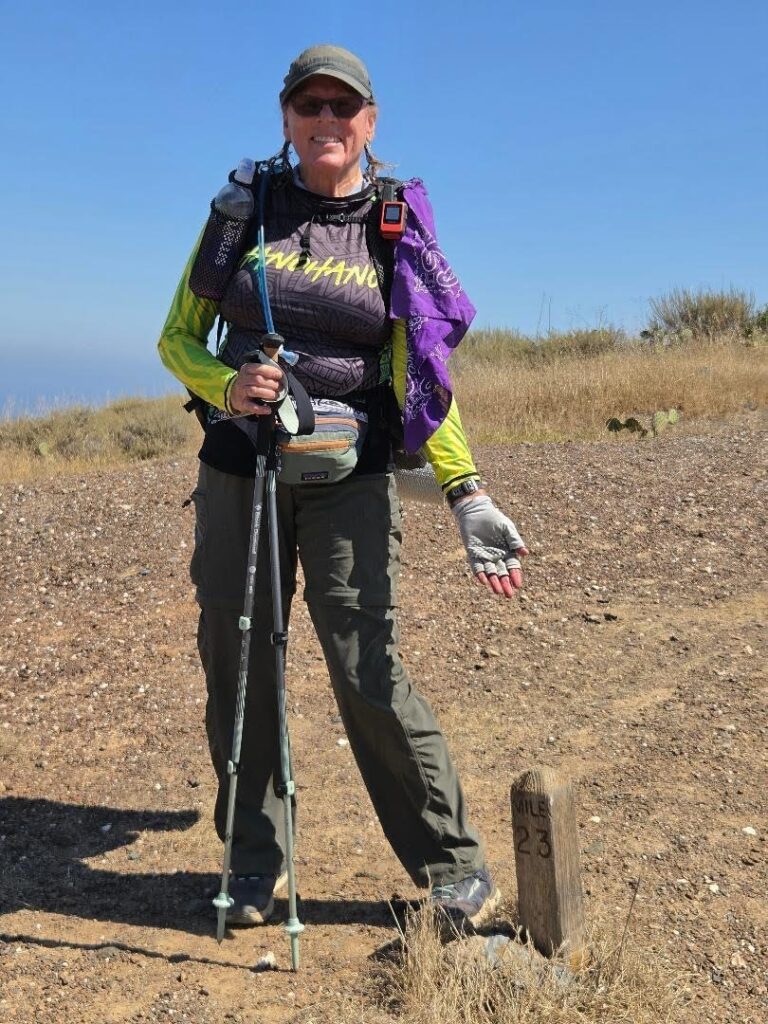
Mile 23 of the TCT
Photo provided by Peggy Goddard
I don’t intend to break any records on the trail. In fact, I’m happy just to be able to “Keep on Moving” (that’s my motto). At 75, I’ve been section hiking the PCT for over 12 years and only have 110 miles left. That includes the extra 30 miles back to Hart’s Pass from the Canadian border.
Being a Southern California native, one of my favorite training hikes for the PCT is the Trans Catalina Trail. I’ve completed it twice, but this year I decided it would be fun to just hike over to Little Harbor from Two Harbors to hang out, relax, kayak, and maybe day hike for a couple of days. So, that’s exactly what I did.
I invited my partner and two fellow Sierra Club Chapter Outing leaders who are in their 80s. Backpacking is not just for the young and strong; it’s also for the mature and wise. When the body no longer has the will, you can always find a way. There are always workarounds! But more about that later.
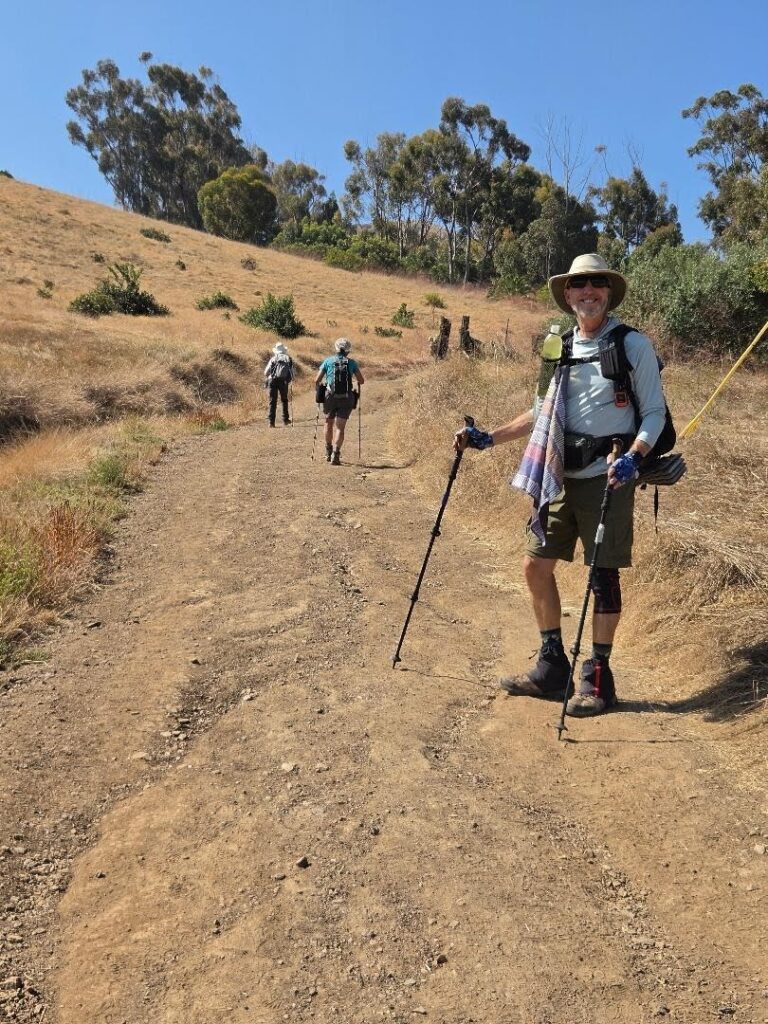
Heading out of Two Harbors
Photo provided by Peggy Goddard
Without further ado, here are my favorite features that I use on the trail every day!
1. Waypoints
Before I go to bed at night—either in my tent or while eating dinner, depending on the mosquito population, I check the listed waypoints to determine my goal for the next day. If I am trying to average 9 miles a day (hey, at my age, 9 miles is a good day for me!), I look approximately 9 miles ahead on the waypoints list and try to find a campsite with a water source nearby. That will be my optimal goal. Sometimes it’s 8 miles out and sometimes 10, but I try not to go farther than that.
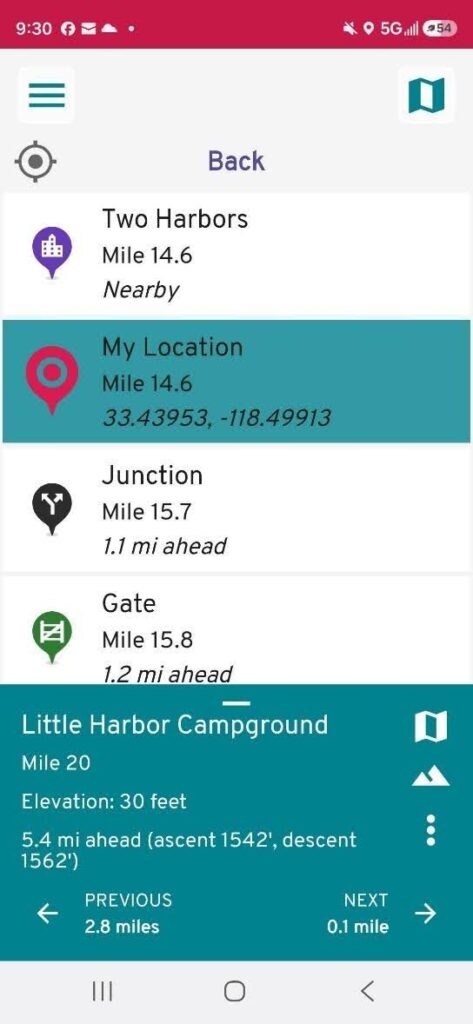
Two Harbors to Little Harbor distance and elevation gain
Photo provided by Peggy Goddard
2. Elevation
Next, I check the overall elevation gain and loss between my current location and my goal for the day. If it’s a big elevation day (like over 2,500 feet), I may pick a closer campsite.
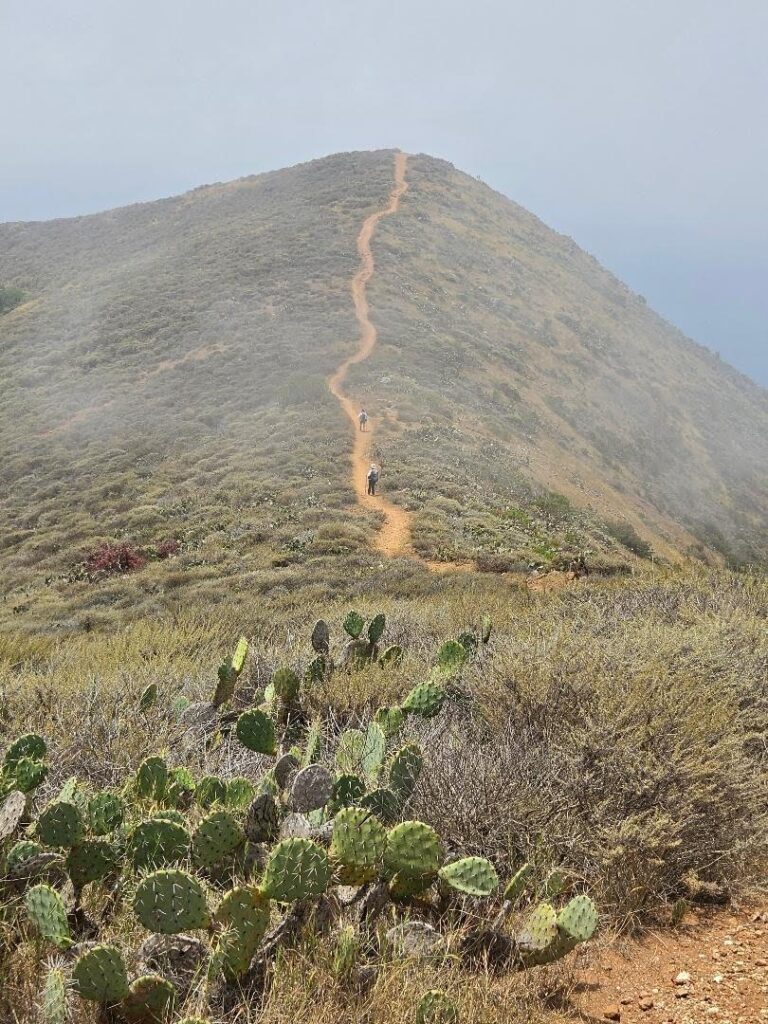
When you reach the top and you find it just keeps going up..
Photo provided by Peggy Goddard
3. Point-to-Point Mileage
Throughout the day, while taking a break, I’ll often check how much farther I have to go. Always keeping my chosen goal in mind, I check to see how many miles I have left and how much more elevation gain remains. Just seeing those numbers decrease as I progress is a big motivating factor for me.
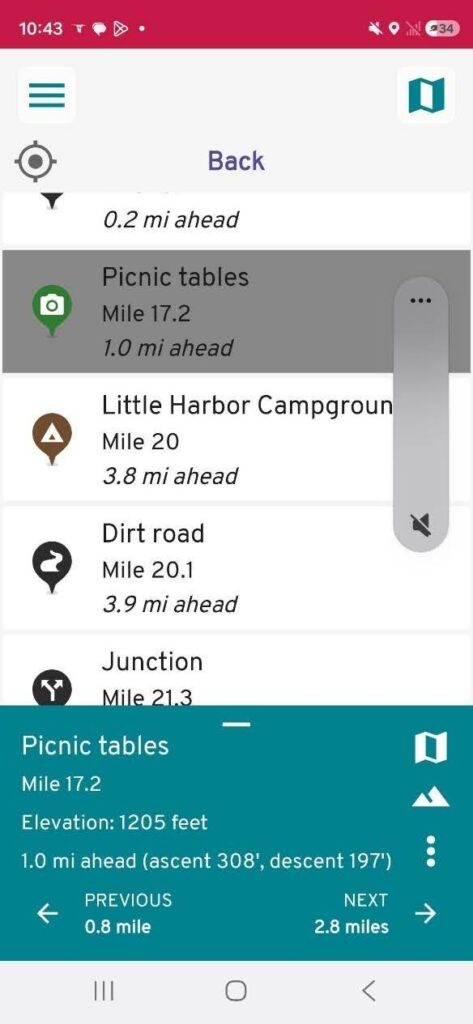
One mile to our rest stop! Only 308 more feet up.
Photo provided by Peggy Goddard
4. Water Sources
Water is heavy, but I like to have a minimum of 2 liters on me at all times. If I can’t find a campsite with water near it, I’ll plan to fill up at the last water source before camp so I have enough to last to the first water source the following day.
5. Camping and Shelters
How many tent sites are there? Are the sites nice, level, and shaded? These are all factors I like to weigh. FarOut has a description of the campsite in the “About” tab, but the “Comments” tab has more subjective information.
6. Hiker Comments
The hiker comments are probably the most useful resource I use, and they can’t be found in any other app that I know of. Sometimes the app says there are two campsites in a given spot, but if you check the comments, you will find there are actually 4 or 5. Often there will be a water source right near a campsite that doesn’t show up on the waypoints but is reported in the comments.
7. Maps
The map is great for seeing where you are in relation to the surrounding countryside. Maps can also be used to navigate if you get off trail, whether on purpose or accidentally.
On my recent trip to Catalina, we stayed at Little Harbor for two nights. We rented kayaks but tired of them after our first day, so we decided to try to make it to the Airport for lunch. It would be a 12.6-mile trip, which I wasn’t sure I could make, but then someone told us about Sheep Chute Road, which was only a 10-mile round trip to the Airport. We decided to give it a shot.
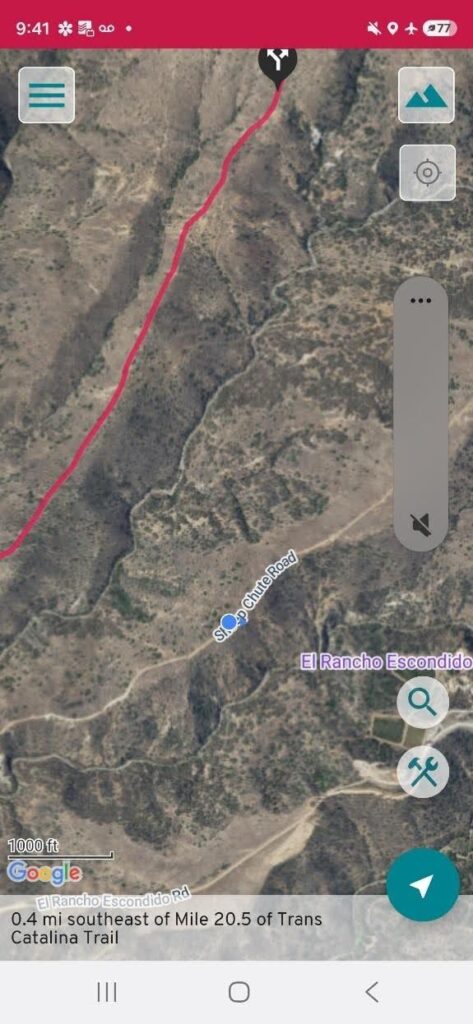
Navigating Sheep Chute Rd on the FarOut Map
Photo provided by Peggy Goddard
I had not really used FarOut for this in the past because of the PCT, as I was always on the trail. I opened the map and found Sheep Chute Road. My location on the map was indicated by a blue dot. I could see exactly where I was and could estimate how far we had gone.
About 3 miles into the hike, we decided to turn around. It was hot, and we had left a beautiful beach behind. We were not quite done with hiking, though, so we checked the map and found a side road that went back past the old Wrigley Ranch, which is now called El Rancho Escondido. There are some vineyards there, but it’s mostly just a horse ranch… no wine tasting!
We made it the rest of the way back to camp using the map, and I was happy that I discovered a new use for FarOut!
Oh, and about that workaround I mentioned earlier? We used the very affordable Catalina Island Company Gear Haul. At my age, I no longer consider this cheating, as without it, my trip would not have been as enjoyable. I’m just happy to be able to get out there.
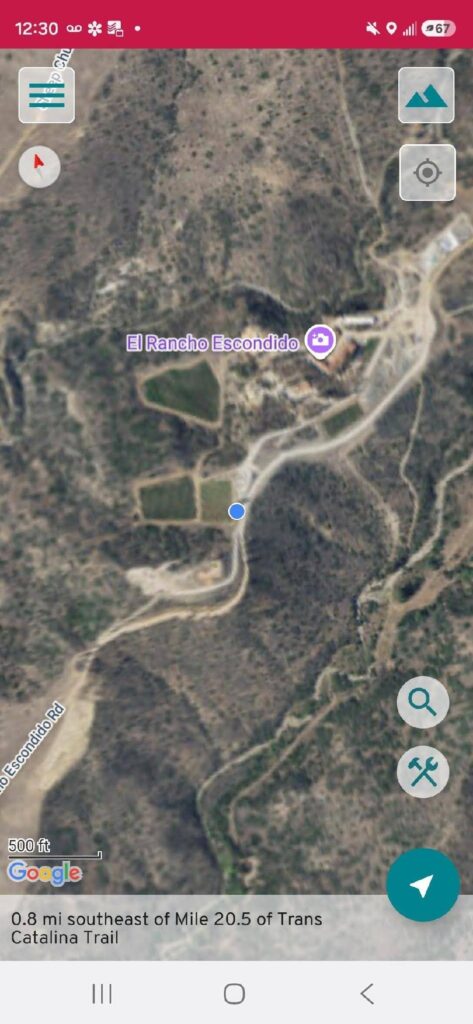
Photo provided by Peggy Goddard
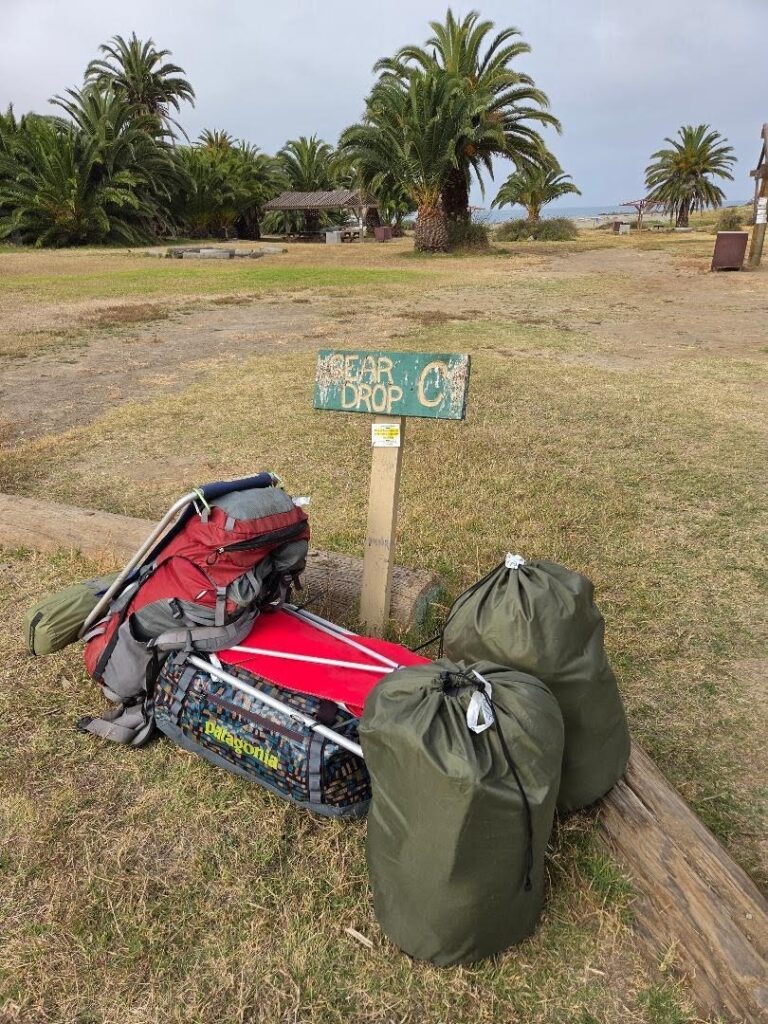
Catalina Island Company Gear Haul
Photo provided by Peggy Goddard
Backpacking at my age isn’t about brute strength but about using the right tools to adapt when the trail is more than you can handle. With a little wisdom and a great app in your pocket, you can always find a workaround, stay safe, and “Keep on Moving!”