
National Outdoor Leadership School (NOLS ) is an outdoor school whose primary focus is leadership skills as the name implies. Our instructors stressed this point, since NOLS sometimes has a reputation as a hard-skills school. Hard skills don’t take long to learn, they explained. The ability to successfully lead a group in the backcountry, is a much finer skill and much more difficult. The purpose of most NOLS courses is to develop that ability (mastering it takes a lifetime), and the purpose of this particular course is to train instructors for NOLS.

After meeting my fellow instructor candidates in Lander, Wyoming, at NOLS’s international headquarters, we had a day and a half of orientation to get acquainted with the school’s mission, history, and how courses generally start.
The group consisted of twelve students from all over the US as well as a few from Australia and Kenya. Our three instructors had hundreds of weeks of experience in the field between them, and were highly recommended by others we met in town.
The classroom in camp. Class time was concise, with more emphasis placed on practice.
Photo by Ryan Linn
Soon enough, we were thrown into the field to begin the meat of the training.
We arrived at the trailhead late in the afternoon amid a wet snowstorm. It was late spring in the Wind River Mountains, and it had been a very dry winter according to the locals, but for those of us from different climates it seemed plenty snowy.
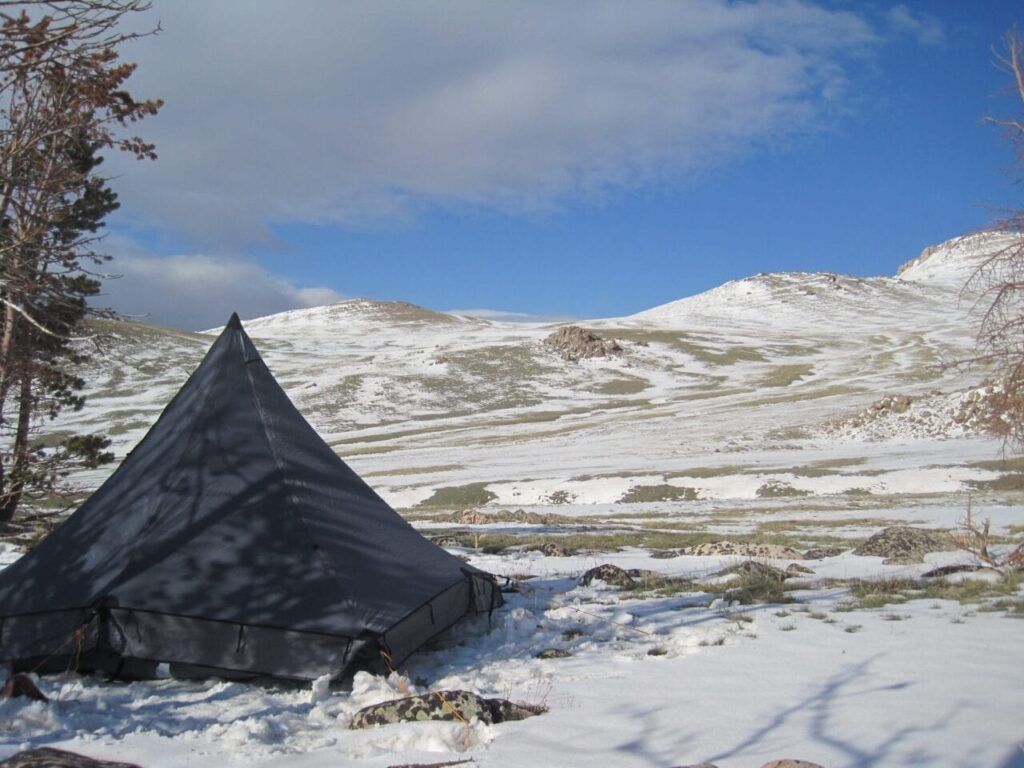
The Aussies, who hadn’t seen falling snow more than once or twice in the past, were as excitable as young kids in the new conditions. “Now I know how people feel when they visit Australia and see a kangaroo for the first time,” one of them said.
The novelty wasn’t all fun, though– these kind of conditions could easily happen on a student course, and, as instructors, we would need to facilitate a group of students (some of whom may have never hiked or camped in snow) to adapt to the environment.
Camp at 10,000 ft
Photo by Ryan Linn
By the third day we had climbed to 10,000 feet in elevation, and we didn’t get below 9,000 feet for the next thirty days, aside from a day-hike to a trailhead to meet a resupply team.
This was a very different experience from my usual backpacking excursions– packs were heavier (mine ranged between 35 and 65 pounds depending on group gear and food, although in future courses I can lighten that considerably), daily miles were shorter (for various reasons, including that we were off trail for all but one or two days), time between resupplies was longer (9, 11, and 12 days, which is a lot of food), and the food we cooked was a lot more elaborate (yeast breads, lasagnas, fudge, brownies, cakes, and so on).
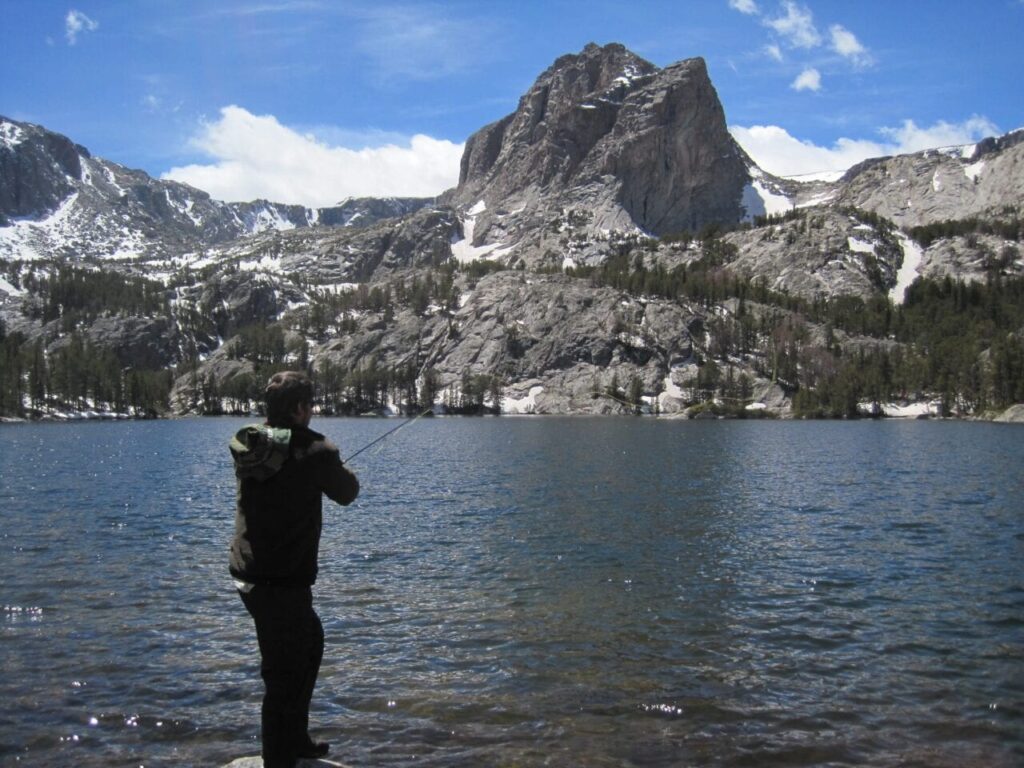
There were classes on fly fishing, geology, snow travel, group development and dynamics, weather patterns, and much more.
Fly fishing! We didn’t catch much, but I’m hoping to get more practice at some point.
Photo by Ryan Linn
The first snowstorm cleared by the third day, but there was no shortage of adversity for our group. For the first week, several of the group suffered from a cold that was making the rounds. About halfway through the course, just after we had crossed the Continental Divide, one of the students suffered a severe ankle sprain while coming down a long boulder field.
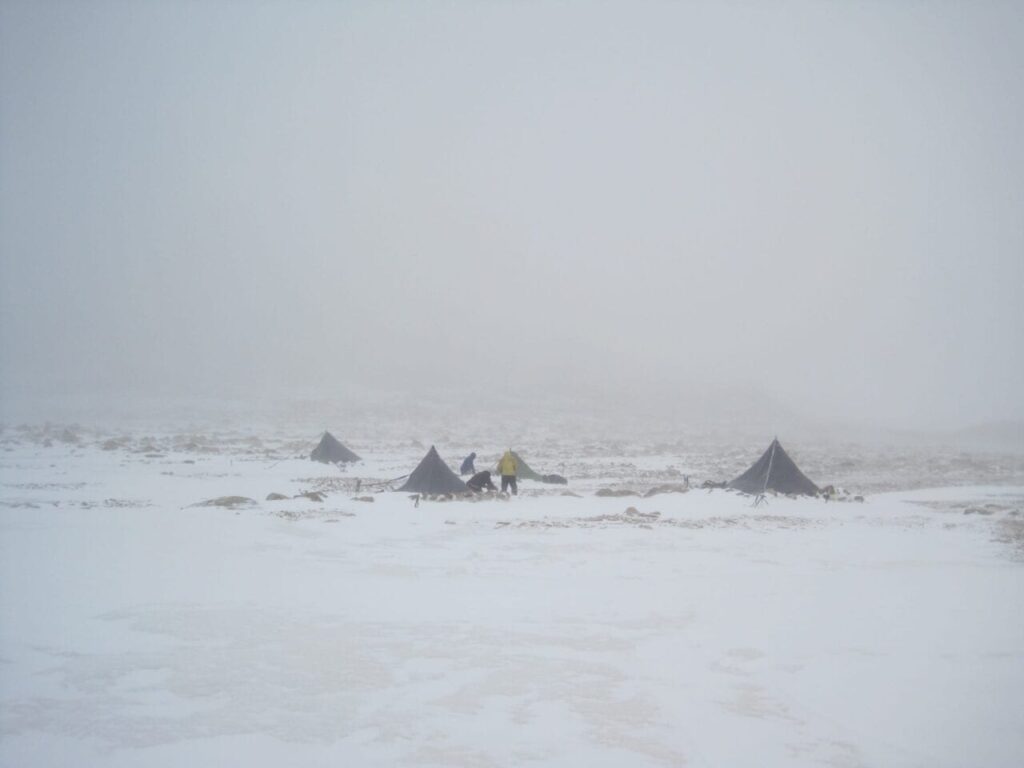
The next three nights tested everyone’s resolve and skills, as a blizzard rolled in and pinned us at a completely exposed 12,000 foot campsite. White-out conditions and 40-50 mile per hour winds made life very difficult (there’s a long story in there, but you can use your imagination).
Later in the course, melting snow made for exciting river fords and thick clouds of mosquitoes.
Second day of being stuck on Hoth (12,000 feet elevation, high winds, snow… glorious).
Photo by Ryan Linn
Amazingly, until the 32nd day we saw only one person not affiliated with our group. That means our small group of fifteen was an almost completely insular community.
I can’t do a fully detailed trip report for the month in the wilderness, so some pictures and the overview will have to do. If you’d like to know more about NOLS, I’d highly encourage a visit to their website– and if you’re a student thinking of taking a course I’d be happy to talk more.
The course I took while in college was the single best life-changing experience I’ve had (yes, much more important than the Appalachian Trail hike), and this instructor course was nothing but positive.
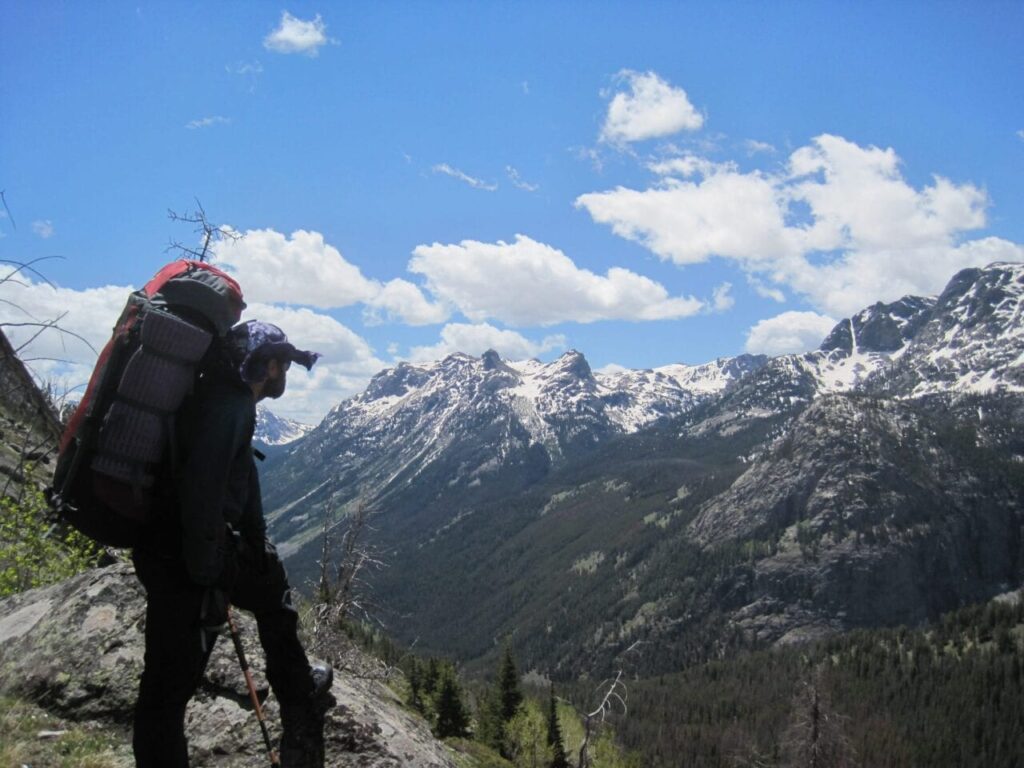
Spring finally begins at lower elevations. Off trail navigation is so much easier out west!
Photo by Ryan Linn
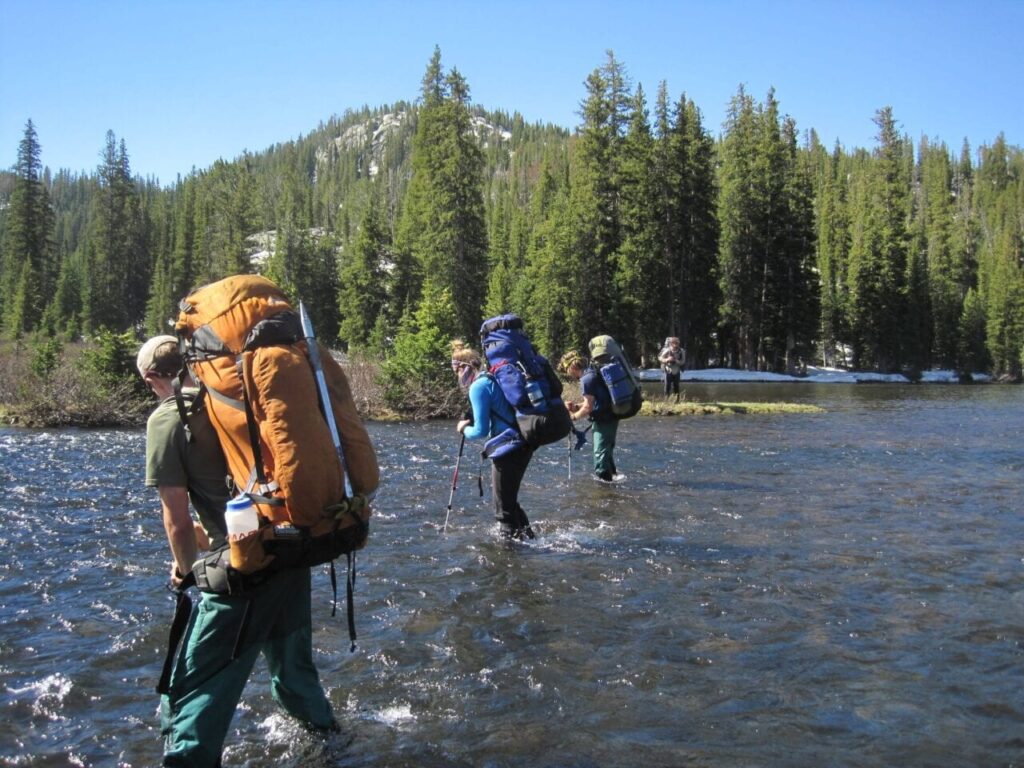
River crossing during spring melt was all about wet feet.
Photo by Ryan Linn

While every instructor candidate on our course was approved to work for NOLS (the course is described as a 30 day job interview), not all of us were placed on courses for this summer. I returned to New England a few days after the course ended, with the possibility of working some NOLS courses later in the summer and/or next summer.
Not to worry, though. I have some exciting plans for the rest of the season, and I’ll let you know about those soon. I’m sure you can guess what they are.