
Wassataquoik Stream in Katahdin Woods & Waters National Monument.
Photo by Ryan Linn
In 2016, Katahdin Woods & Waters National Monument became the newest addition to our National Parks system. This bit of forest in northern Maine is a great place to cross-country ski, mountain bike, canoe, and hike. You can also begin a longer trip on the International Appalachian Trail and hike to Canada. For now, there’s little in the Monument besides some trails, old logging roads, and campsites, so it feels especially wild. But I was curious about the plans for the future. Would there be a visitor’s center? Would the roads be paved? And would the Park Service build more shelters and campsites, or even trails? It’s been two years since the Monument’s designation, and it still seems as remote and quiet as ever.
I’ve found great solitude in the Monument in my past trips there, which is something I treasure about it. But I also hope for more visitors to enjoy the wilderness there, which leads to a dilemma. As more visitors came to see the Monument, could some of that wildness be lost? Now that the campaign to create the Monument was over, I figured I’d just have to wait and see.
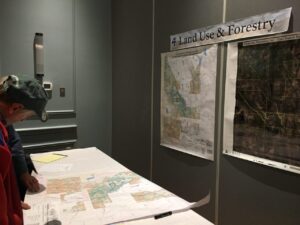
Land use maps showing forest cover and access points for Katahdin Woods & Waters.
Photo by Ryan Linn
Earlier this year the Park Service sent several emails announcing public meetings all throughout the state. A few months later, more emails arrived, announcing more public meetings. I saw town names like Stacyville, Presque Isle, Bangor— all over the state but far from me. Each notice mentioned that the meetings would be used to help draft the management plan for the Monument, so I hoped I could make it to one. In November I finally got my chance: the next meeting would be held in South Portland.
At the meeting, I found a friendly crowd of curious members of the public already looking over displays that highlighted aspects of Monument management needs. I looked through displays about Natural Resources, Land Use & Forestry, Scenic & Cultural Resources, Recreation, and Other Unique Qualities. A planning team, consisting of a local consulting firm, National Park Service employees, and volunteers, had set up the meeting. With public meetings like this one, they would listen to the public, then use what they’d learned to create a management plan for the future of the Monument.
Members of the public discussing hiking, history, and paddling in Katahdin Woods & Waters.
Photo by Ryan Linn
As we wandered about, visiting the displays, volunteers explained some of the necessities of the Monument’s management. Mostly, they answered our questions and took notes about what we wanted from the Monument. Many of us went for the “Recreation” station, but I saw plenty of interest in history and conservation as well. I was excited to see all this enthusiasm for just the possibilities of what could come. The few suggestions I made were pretty obscure, but the volunteers seemed eager to hear about them anyway. Some day, maybe I’ll go to the Monument again to backpack on some of the trails that I suggested. Until then, it’s just nice to know that the management plan will take opinions like mine into account.
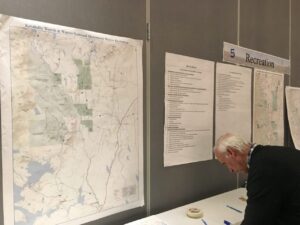
Past and current public comments for recreational use in Katahdin Woods & Waters.
Photo by Ryan Linn
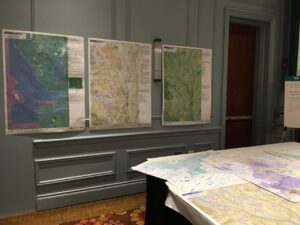
Maps of several types of natural resources in the National Monument.
Photo by Ryan Linn
There will be more public meetings for Katahdin Woods & Waters’s planning phase, and comments can sent online if you can’t make it to the meetings. And if you’re not interested in being a part of planning for this particular Monument, I encourage you to keep an eye out for opportunities to get involved in your local public lands. Especially with new parks, it’s well worth the time to weigh in on what you’d like to do and see during your future visits.