
There are not many studies showing the impact of long-distance hiking on the body, and the studies that do exist are conspicuously lacking female subjects. The aim of this article is to document the changes that 135 days of hiking produce in both male and female physiology, using DEXA scans as the primary means of comparison. DEXA (dual-energy X-ray absorptiometry) uses both high- and low-energy X-rays to measure bone density, lean muscle, and visceral fat. These scans are generally accepted to be accurate within 1% and can provide an accurate regional breakdown of the body.
The average Pacific Crest Trail thru-hiker will hike 2,650 miles (~4,260 km) over 5 months with 490,000 ft (~150,000 m) of elevation carrying a 25-35 lb (11-16 kg) pack. That’s the equivalent of climbing Mount Everest more than 16 times.
This raises a natural question: how does all of this affect the human body? At what point, if any, does the body begin to deteriorate from the repeated stress instead of continuing to strengthen? And how large a role does diet play in that outcome?
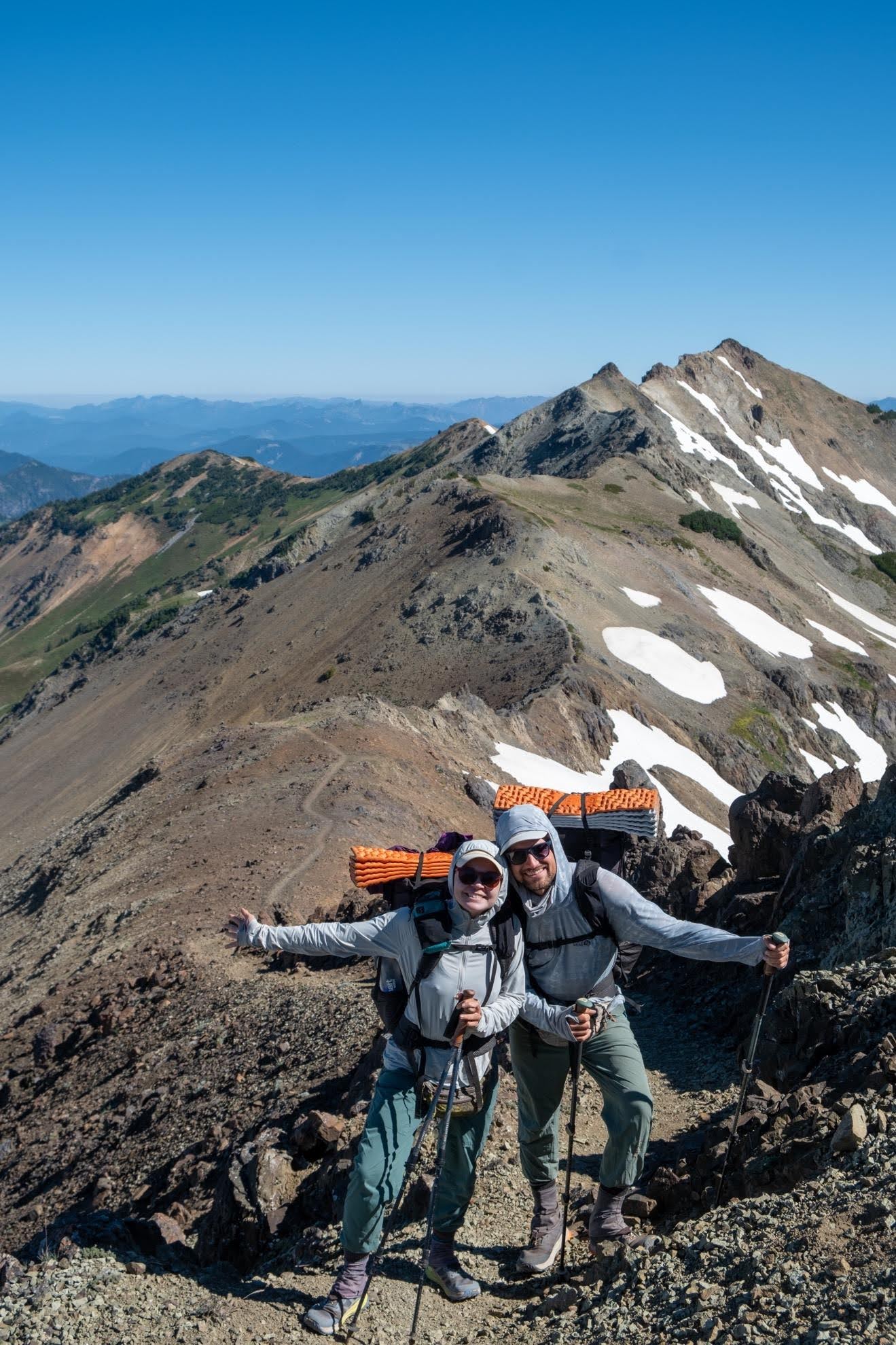
Photo provided by Katie and Patrick Hare
This is a small study with a sample size of 2, one male and one female participant who are 31 years of age at the end of the hike. Both participants had their initial scan at a DexaFit location 5 days prior to starting the hike with the post hike scan occurring 3 days after coming off trail at another DexaFit location. Each participant lay on a table while the DEXA scanner ran from head to toe over the course of about 5 minutes, and the results were then reviewed with the DexaFit technician.
During the hike, the female participant logged all consumed food to keep track of protein and calorie intake. The participants hiked for 135 days at an average mileage of 18.5 miles per day and an average elevation gain and loss of 3,200 feet, including 18 rest days.
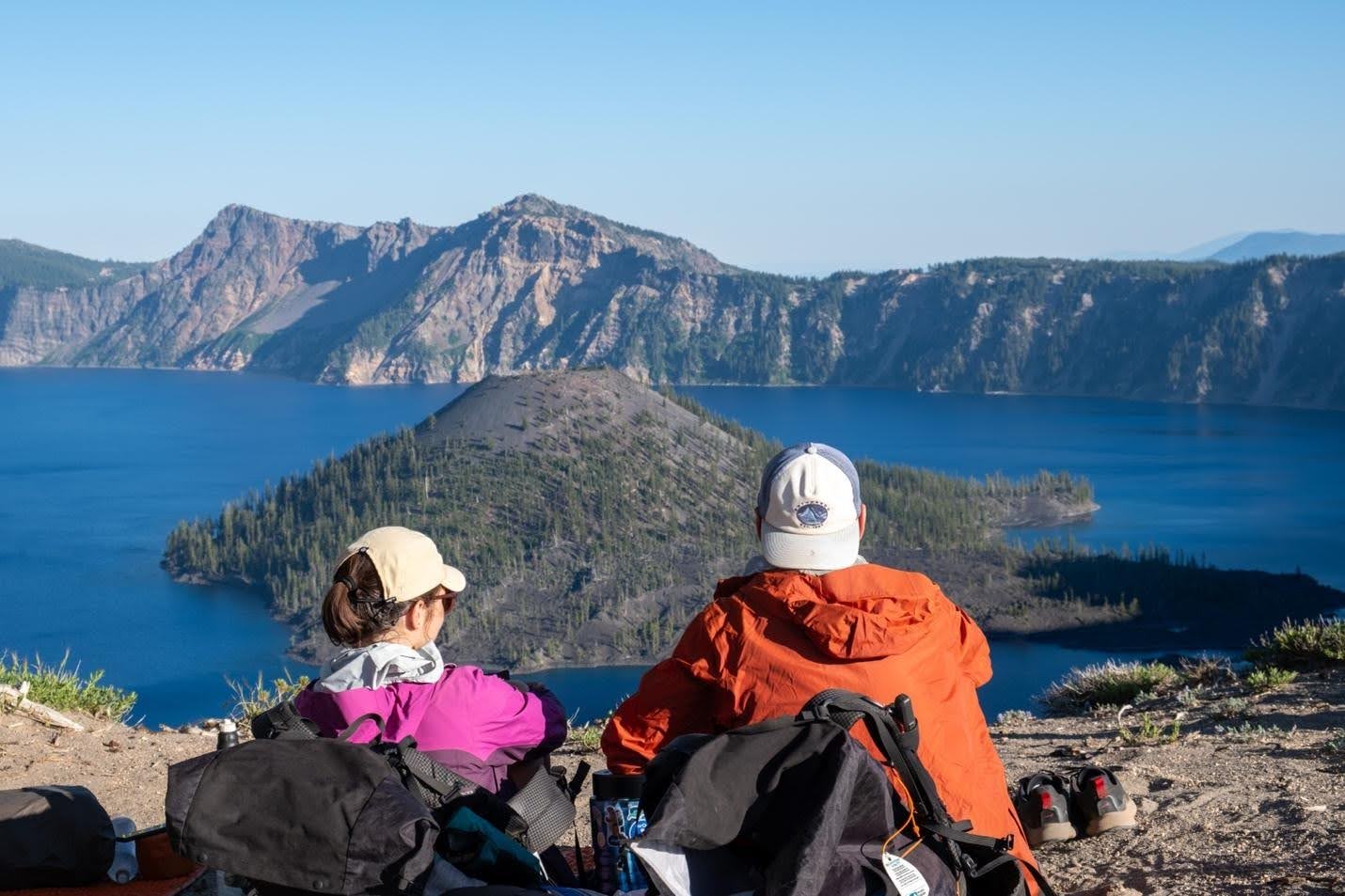
Photo provided by Katie and Patrick Hare
The Results
Over the 135 days on trail, the female participant lost 17.7 lbs of fat while gaining 5.2 lbs of lean mass [Figure 1], and the male participant lost 18.6 lbs of fat while also losing 1.6 lbs of lean mass [Figure 2].
The female participant logged an average of 2540 calories (increasing to about 3,300 for the last two weeks of the hike) and 92 g of protein per day. Given the number of days on trail and assuming each pound of fat lost is about 3,500 calories, we can estimate the female participant burned about 3,000 calories per day. Adjusting for the male participant’s calorie intake, which averaged 500 more than his counterpart’s, results in an estimated average of 3,500 calories burned per day.
The female participant’s lean mass increased while her male counterpart’s decreased; however, both saw an increase in T-score, correlating to an increase in bone density.
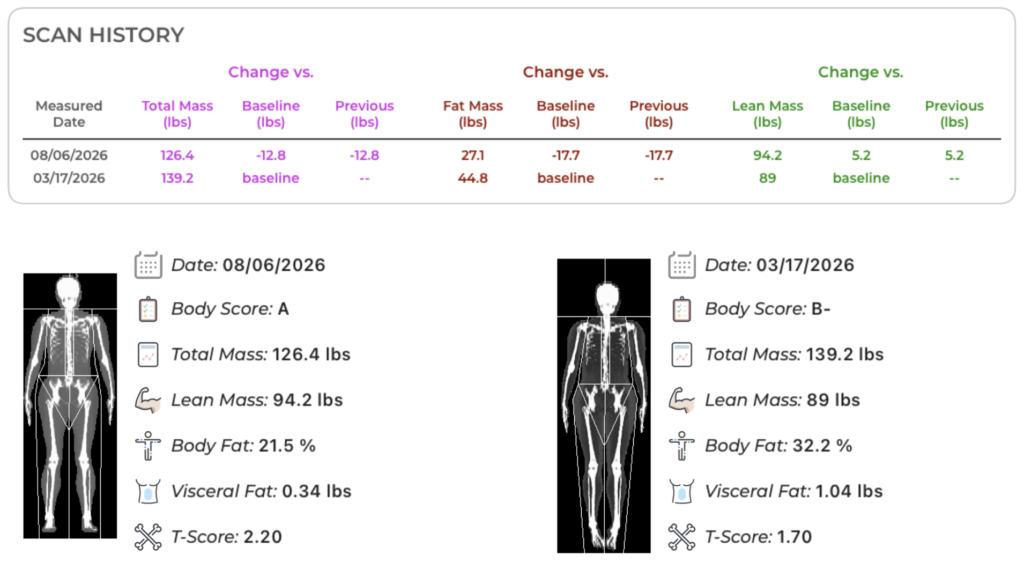
Figure 1. Female participant
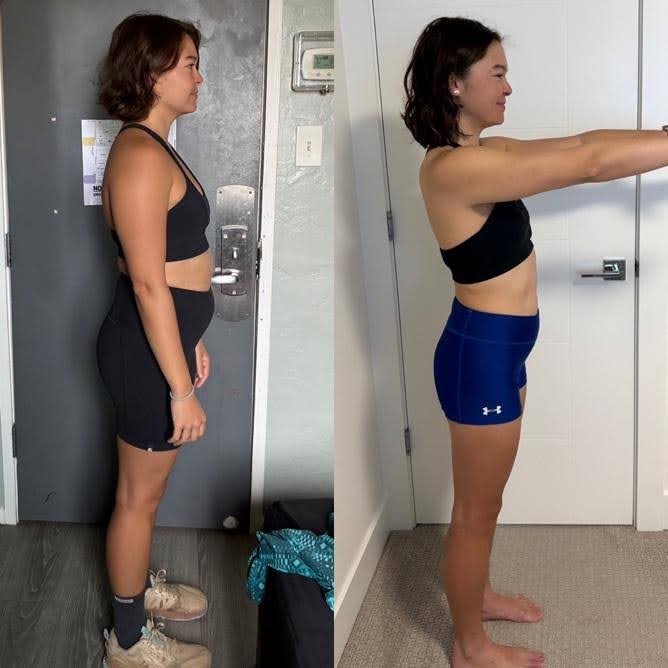
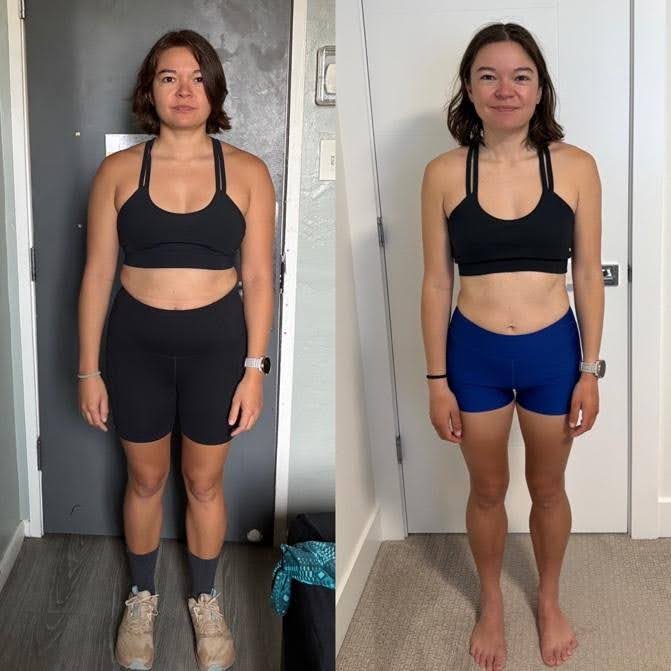
Photos taken 1 day before starting the thru hike and on day 120
Photos provided by Katie and Patrick Hare
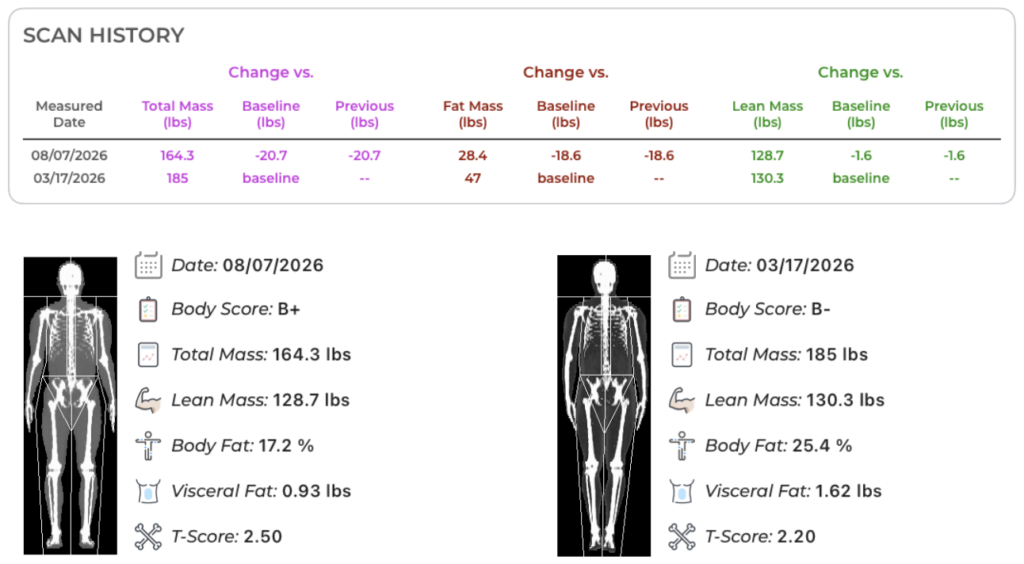
Figure 2. Male participant
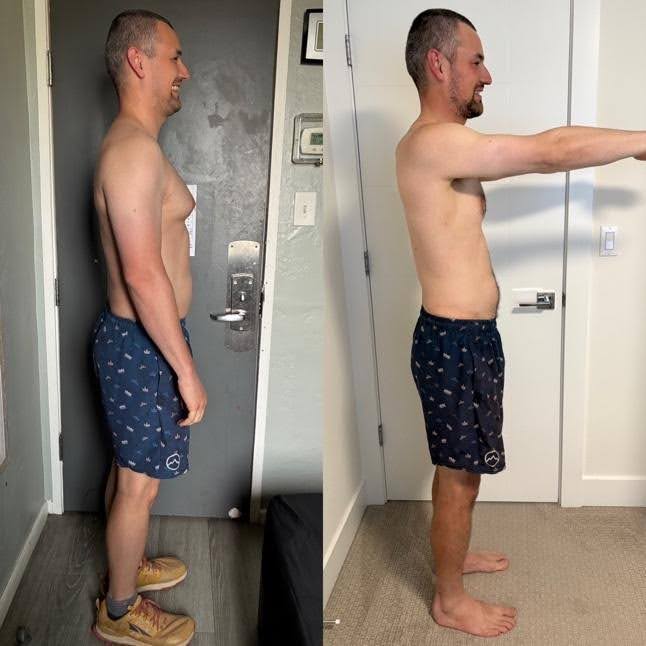
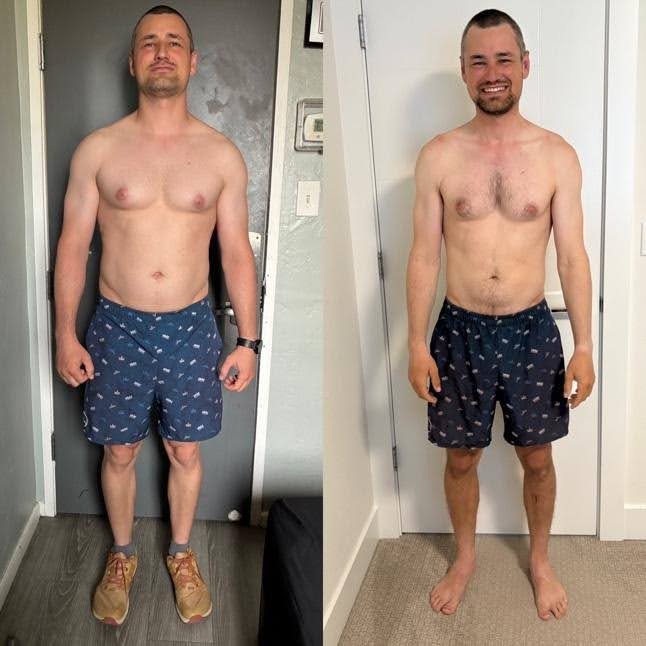
Photos taken 1 day before starting the thru hike and on day 120
Photos provided by Katie and Patrick Hare
We previously thru-hiked the Appalachian Trail in 2023. Back then, our trail diets included an average of one Oreo per mile. Patrick still lost about 30 lbs during our 145 days on trail, but Katie lost only 5. This deeply puzzled her and was a large reason behind the decision to log food during the PCT hike. Many factors could explain the difference in our physical changes between the AT and the PCT. For one, we did not eat breakfast before starting our hikes on the AT; we would wake up, pack up camp, and hike about 3 miles or so before stopping to eat some sort of protein bar. We also did not pay much attention to our protein intake or the quality of food we were consuming in general — as the saying goes, garbage in, garbage out.
Even though we did not have a DEXA scan after that hike, qualitatively we felt the physical stress of the trail more acutely on the AT. Many thru-hikers can attest to the “hiker hobble,” where the first steps of the morning resemble the shuffle of someone in need of a walker, not a high-performance athlete about to go crush 20 miles with a 500 ft/mile incline on three packages of Pop-Tarts and a dream of the terminus. On the PCT, we felt less frail toward the end of the hike. The increase in T-scores for both of us supports the argument that we fueled our bodies well enough that they were not resorting to cannibalizing themselves for much-needed minerals.
Visceral fat is necessary for cushioning organs and absorbing shock, but excess visceral fat is linked to an increase in metabolic-related diseases such as diabetes and coronary disease [3]. Visceral fat is known to release inflammatory chemicals that are linked to insulin resistance. Patrick saw a 42.5% reduction in visceral fat, while Katie saw hers drop 67.3%. A healthy range of visceral fat is generally accepted to be less than 10% of total fat [4]. While we were both under this metric when we started the hike, the loss of visceral fat tells us our metabolic function was likely not negatively impacted despite our high sugar diets and Katie’s newfound addiction to soda.
We would be remiss not to mention that our “study” consists of just the two of us. With so few data points, we are unable to determine the statistical significance of any of our measurements. We don’t even have data from our first thru-hike for a better comparison. That said, it’s compelling that, in terms of lean muscle changes, the woman outperformed the man in this instance. For Katie, her protein intake supported building 5 lbs of lean muscle mass during the hike. Since our activity level was the same and we were both frequent gym-goers prior to starting the trail, this may be a side effect of Patrick not getting enough calories to support muscle building.
Finally, we are happy to report little to no injuries over the course of our hike. Stress fractures can quickly end a hike prematurely, so prioritizing protein, eating healthy fats like nuts, and supplementing magnesium were instrumental to keeping our bodies healthy on trail after a daily beating of hiking with the pack for up to 12 hours a day.
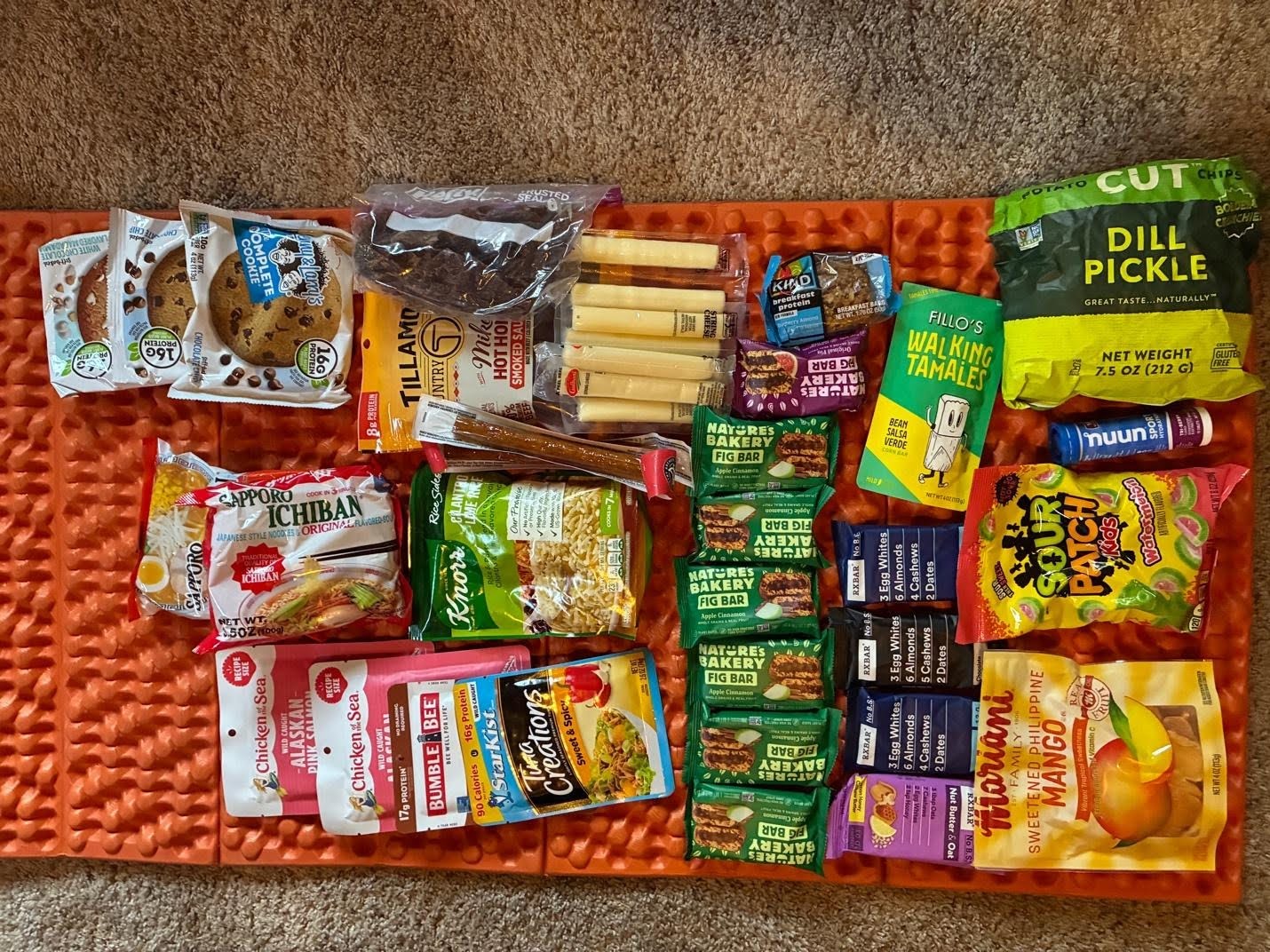
Photo provided by Katie and Patrick Hare
Long-distance thru-hiking pushes the human body to its limit. Mentally, physically, and emotionally, thru-hikers can tell you the highs and lows of them all. In many ways, we feel this data supports the fact that our bodies were made for outdoor movement. Here are a few takeaways to help support your body on your next hike:
• Look at the daily caloric intake for your planned meals and supplement where you can with pre-packaged condiments (olive oil packets, mayonnaise, etc.)
• Prioritize protein by getting as close to 1 g per pound of body weight as you can
• Don’t skip breakfast. Eating within an hour of waking up sets your day up for success —especially for women!
If you’re going on a longer hike, make up calories in town. Town days are cheat days where you get to indulge in whatever weird cravings your little hiker heart desires. A pint of ice cream for breakfast? No shame.
While we don’t know if we have another long-distance hike in our future, we hope our little experiment inspires others going FarOut.